NHLA Graded Lumber North Carolina
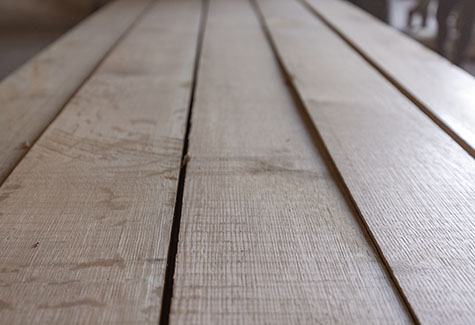 North Carolina is home to some of the most breathtaking timber stands in the United States. From lush hardwood forests to productive pine plantations, it is no wonder that so many sawmills look to our state for the procurement of the highest-quality hardwoods and pine trees.
However, not all mills follow the strict grading processes of the NHLA. This lack of transparency can be frustrating for both producers and end users alike. At Select Hardwoods, we ensure that all of our lumber goes through NHLA grading. This gives our customers the peace of mind that they are getting top-quality and accurately graded material to be used in downstream processes.
What is the NHLA?
The NHLA, or National Hardwood Lumber Association, is the leading trade association and authority for establishing and maintaining the official grading standards of North American hardwood lumber. Founded in 1898, the NHLA set the precedent for measuring and inspection standards. Additionally, it provides training and yield analysis to further the hardwood lumber industry.
When aligning with the NHLA, sawmills such as ours gain access to conventions and networking events, and we can explore emerging trends and partnerships that can further our mission of sustainability and high-quality hardwood lumber procurement.
NHLA Grades for Hardwood Lumber in North Carolina
When purchasing hardwood lumber from Select Hardwoods, understanding lumber grades is essential for choosing the right materials for the job. Whether you are manufacturing furniture or building a house, it is imperative to pick the right lumber. The NHLA-established grading rules help lumber manufacturers, distributors, and buyers evaluate hardwood quality and usability. These standards create consistency throughout our lineup of wood products.
Unlike softwood grading systems, which often emphasize structural strength, NHLA hardwood grades primarily focus on the amount of clear, usable wood that can be obtained from each board. Factors such as board dimensions, knots, splits, and other natural characteristics influence how lumber is graded. Higher grades generally provide larger clear cuttings, while common grades offer economical options for projects that require smaller pieces of usable hardwood.
Common NHLA Hardwood Lumber Grades
- FAS (Firsts and Seconds): One of the highest standard hardwood lumber grades, FAS provides large, clear cuttings suitable for premium furniture, cabinetry, architectural millwork, and other applications where appearance and consistency are important.
- FAS One Face (F1F): Lumber that meets FAS requirements on its better face and No. 1 Common requirements on the reverse face. This grade is useful when one visible surface requires a higher-quality appearance.
- Select: A high-quality grade commonly used for cabinetry, furniture, and decorative woodworking. Select lumber offers a practical option for applications requiring a clear face without necessarily meeting all FAS requirements.
- No. 1 Common: Often called cabinet grade, No. 1 Common hardwood provides smaller clear cuttings than FAS while offering excellent value for furniture components, cabinet parts, flooring, and other manufactured wood products.
- No. 2 Common: An economical hardwood grade suitable for applications requiring smaller clear pieces, including flooring, pallet components, and other products where large, uninterrupted sections of clear wood are unnecessary.
NHLA Grades Matter When Purchasing Hardwood Lumber in North Carolina
Understanding NHLA grading standards helps manufacturers, contractors, and woodworkers select lumber that balances material quality, usable yield, and overall project costs. Purchasing the highest grade is not always necessary, particularly when a project involves shorter components, smaller cuttings, or materials that will not be visible in the finished product.
Choosing the appropriate hardwood grade can reduce material waste, improve production efficiency, and help businesses control manufacturing expenses. For example, a cabinet manufacturer producing large, exposed panels may benefit from FAS lumber, while a flooring manufacturer or furniture producer working with smaller components may find No. 1 Common or No. 2 Common lumber more cost-effective.
Choosing NHLA Hardwood Grades for Different Applications
The intended use of hardwood lumber is an important consideration when selecting a grade. Furniture manufacturers, cabinetmakers, flooring producers, and architectural millwork companies often have different requirements for board appearance, dimensions, and clear cutting yield. Choosing lumber based on these requirements helps manufacturers make better use of their materials.
For projects that require long, uninterrupted sections of clear wood, higher NHLA grades can provide advantages. For projects involving shorter components or pieces that will be further processed, Common grades may offer a more economical solution. Understanding these differences helps buyers select hardwood lumber that meets their production needs without unnecessary material expenses.
Species of NHLA Graded Appalachian Hardwoods Available in North Carolina
At Select Hardwoods, we pride ourselves on sourcing the highest quality Appalachian hardwoods available. Because of the rich diversity of species that can be found across our region, we can offer a variety of NHLA-graded hardwoods, including:
- Rift and Quartered White Oak: Known for its exceptional dimensional stability, straight grain patterns, and distinctive appearance. Quarter-sawn white oak often features prominent medullary ray flecks, while rift-sawn lumber offers a more uniform, linear grain. Ideal for premium cabinetry, furniture, flooring, and architectural millwork.
- Plain Sawn White Oak: Features attractive, varied grain patterns, including distinctive cathedral patterns. White oak is valued for its strength, durability, and natural resistance to moisture and decay. Commonly used for hardwood flooring, furniture, cabinetry, and interior woodworking.
- Red Oak: A strong, durable hardwood with a prominent open grain and warm reddish tones. Known for its excellent machining and finishing characteristics, red oak is widely used in furniture manufacturing, cabinetry, flooring, and interior trim.
- Hickory: One of the hardest and most durable domestic hardwoods, hickory offers exceptional strength, shock resistance, and wear resistance. Its contrasting light and dark coloration creates a distinctive appearance, making it popular for flooring, cabinetry, furniture, and tool handles.
- Poplar: A lightweight, versatile hardwood with a relatively straight grain and smooth texture. Easy to machine, paint, and work with, poplar is an economical choice for painted cabinetry, furniture components, interior trim, millwork, and other manufactured wood products.
- Cherry: Prized for its rich reddish-brown coloration, fine grain, and smooth texture. Cherry naturally darkens with exposure to light and age, developing a deeper, warmer appearance. Its excellent workability makes it a preferred hardwood for fine furniture, cabinetry, decorative millwork, and interior finishes.
- Soft Maple: Offers a fine, even grain and light coloration ranging from creamy white to subtle reddish-brown tones. Although softer than hard maple, it provides good durability and excellent machining characteristics. Commonly used for cabinetry, furniture, interior millwork, and painted or stained wood products.
- Walnut: A premium domestic hardwood recognized for its rich chocolate-brown coloration, distinctive grain patterns, and natural beauty. Walnut offers good dimensional stability and excellent workability, making it highly desirable for luxury furniture, cabinetry, architectural details, and decorative woodworking.
- Ash: A strong, resilient hardwood with a pronounced grain pattern and light coloration. Known for its excellent shock resistance, flexibility, and ability to accept stains and finishes, ash is frequently used for furniture, flooring, cabinetry, sporting goods, and tool handles.
- Sycamore: Features a distinctive grain structure with attractive flecked patterns, particularly in quarter-sawn lumber. Its light coloration and distinctive appearance make it suitable for decorative furniture, cabinetry, interior millwork, and specialty woodworking applications. Sycamore also offers good workability when properly dried and processed.
Hardwood Processing and the Importance of Consistent Lumber Quality
NHLA grading is an important part of hardwood purchasing, but proper processing also influences how lumber performs in its final application. Drying, surfacing, and machining help prepare hardwood boards for furniture production, cabinetry, flooring, and other finished products. Consistent processing makes it easier for manufacturers to work with lumber that meets their specifications.
The hardwood processing services available through Church & Church Planer Mill provide additional options for preparing lumber for downstream manufacturing. When quality grading is combined with appropriate processing, buyers can make more informed decisions about the hardwood materials they use.
Buy With Confidence - NHLA Graded Hardwoods from Select Hardwoods
At Select Hardwoods, we combine our four generations of sawmill experience alongside our attention to detail to source, mill, and market the highest quality NHLA-graded hardwoods in North Carolina. To learn more about how we can help support your next project, contact us today!